Taking your dog along on bike rides can be a fun and adventurous way to spend time outdoors together. However, getting your dog accustomed to a cargo bike can be a process that requires patience, training, and care. Dogs may initially feel anxious or uncomfortable, but with the right approach, you can help them adjust to their new form of transportation. This article will guide you through the steps to get your dog used to riding in a cargo bike, address the issue of motion sickness, and discuss the importance of proper safety measures, including the right kind of leash attachment.
Step 1: Introduce Your Dog to the Cargo Bike
The first step in getting your dog used to riding in a cargo bike is to introduce them to the new vehicle in a calm and positive way. Since the cargo bike is unfamiliar, your dog may initially be apprehensive or try to jump out. Therefore, it’s crucial to help them build confidence and create positive associations with the bike.
Start Slowly
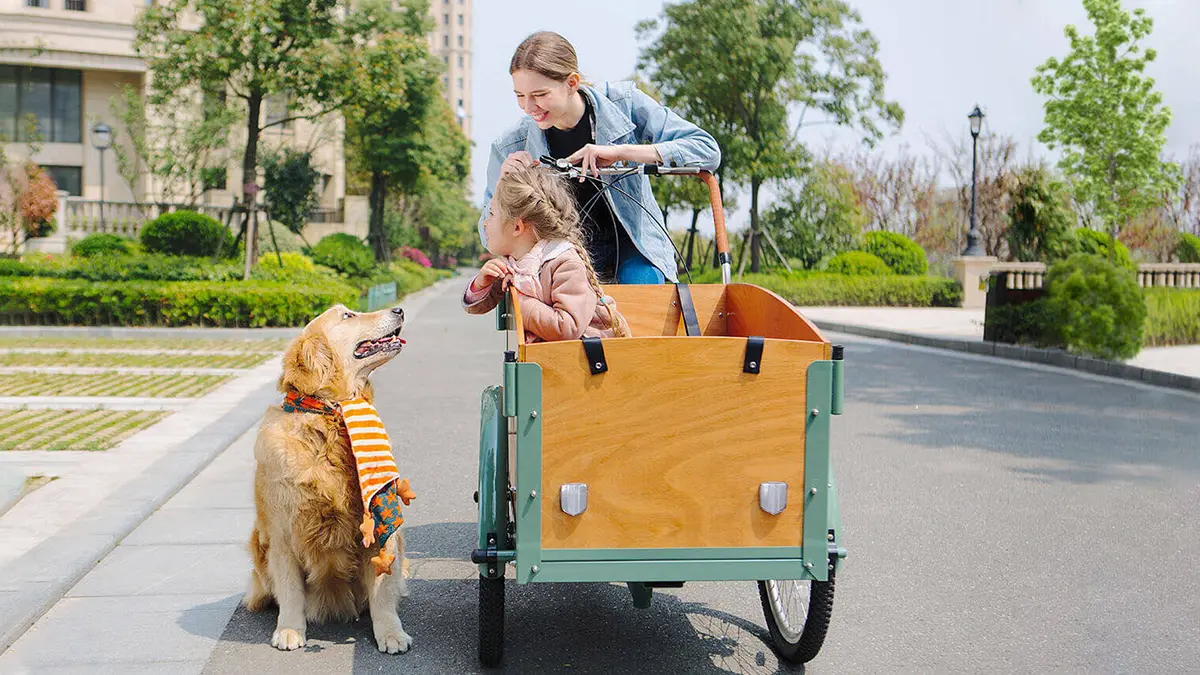
Before going for a ride, allow your dog to explore the cargo bike while it’s stationary. Let your dog sniff around and get comfortable with the bike’s presence. You can place a blanket or soft padding in the cargo area to make it more inviting. Reward your dog with treats or praise whenever they sit or lie down in the cargo bike calmly. This helps them associate the cargo space with comfort and safety.
Practice Without Moving
Once your dog seems comfortable sitting in the cargo bike, spend some time just sitting with them in the stationary bike without moving. You can also get someone else to sit in the cargo area with your dog to help them feel more secure during the first few sessions. This will reduce anxiety and prevent them from trying to jump out.
Take Short Rides First
When your dog is ready, take short and gentle rides in a quiet area, such as your backyard or a low-traffic street. Keep the pace slow, and make the ride as smooth as possible to avoid overwhelming your dog. The goal at this stage is simply to get your dog used to the feeling of movement while inside the cargo bike.
Step 2: Address Motion Sickness
Just like humans, dogs can experience motion sickness, especially if they are new to riding in vehicles or bikes. Motion sickness in dogs can result in nausea, drooling, or restlessness, making the ride uncomfortable for them. Fortunately, many dogs get over this initial discomfort after a few rides.
Start with Smooth Rides
To reduce the chances of motion sickness, start with smooth, short trips before gradually increasing the ride duration. Avoid sharp turns or bumpy roads during the first few rides, as this can increase your dog’s discomfort. If your dog has a history of motion sickness in cars, it may be helpful to consult your veterinarian for tips on how to minimize these symptoms while riding in the cargo bike.
Observe Your Dog’s Reactions
It’s important to observe how your dog reacts during the ride. If your dog shows signs of discomfort or distress (such as excessive panting, drooling, or restlessness), stop and take a break. Let your dog get out and walk around for a few minutes before continuing. With time, many dogs become accustomed to the movement of the bike and start to enjoy the ride.
Step 3: Use the Right Leash Attachment
Ensuring your dog’s safety while riding in the cargo bike is essential. Proper leash attachment is one of the most important factors in keeping your dog secure and preventing accidents.
Avoid Using a Single Leash
A simple leash may not be sufficient to keep your dog safely in place, especially if they are energetic or prone to jumping. Using a single-point attachment could still give your dog enough slack to attempt jumping out of the bike, which is both dangerous for your dog and distracting for you as the rider.
Opt for a Two-Point Restraint System
A two-point attachment system is a more effective way to secure your dog in the cargo area. With two attachment points, the leash can be connected at both sides, reducing the chance of your dog shifting or leaning too far in any direction. This system evenly distributes your dog’s movement, providing them with some freedom to sit or lie down, but preventing them from jumping out of the cargo bike. Be sure to attach the leash to a stable and secure mounting point to ensure your dog remains safely inside the cargo area throughout the ride.
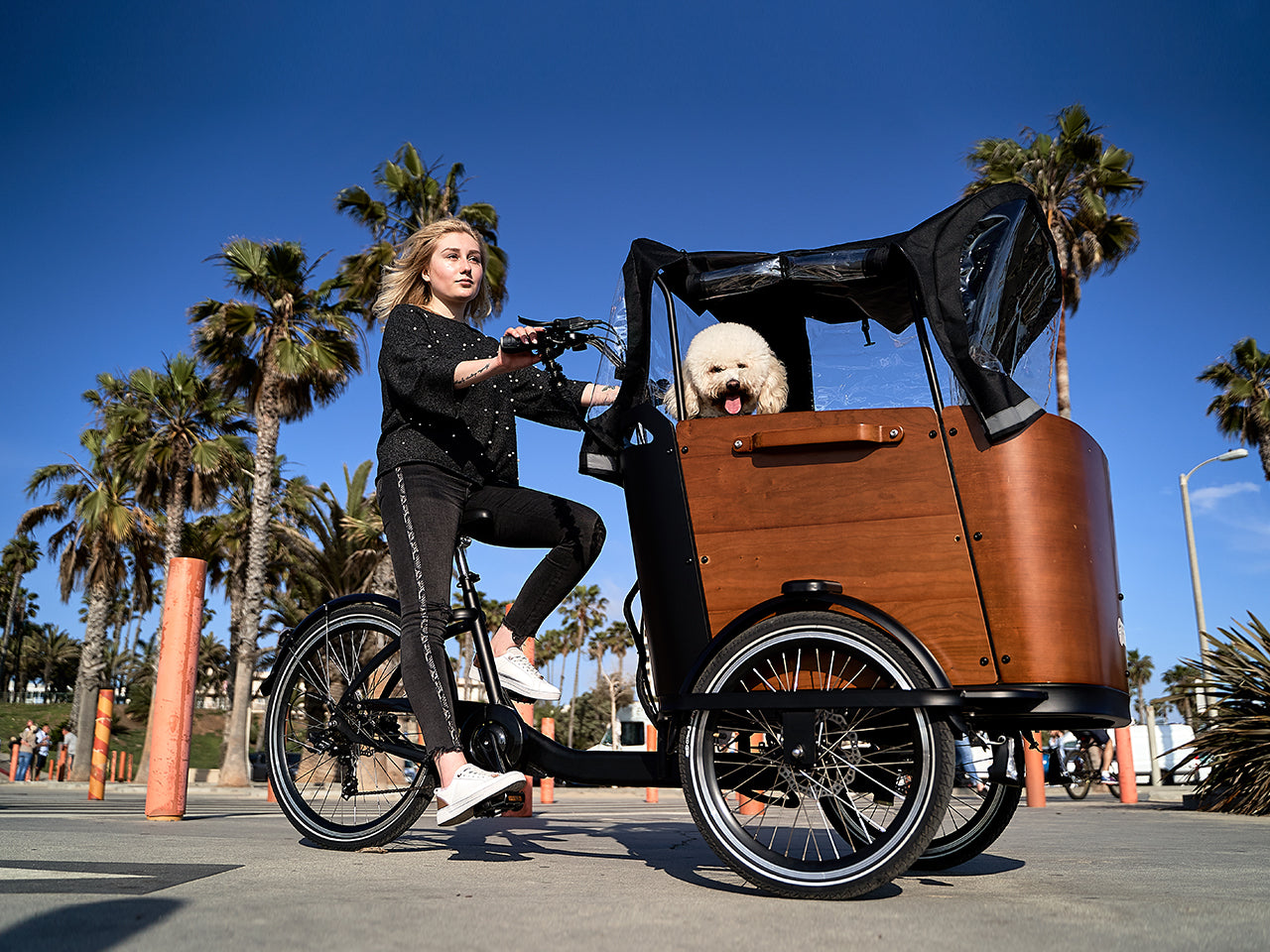
Step 4: Ensure Comfort for Your Dog
A comfortable ride is key to making your dog feel safe and happy while riding in the cargo bike. Pay attention to your dog’s seating area and the road conditions you’ll be traveling on.
Soft Padding for Comfort
Cargo bikes designed for transporting dogs should have soft padding or a cushion in the cargo area to make the ride more comfortable, especially on bumpy roads. If your cargo bike doesn’t have built-in padding, you can add your own blankets or a removable cushion to create a cozy and comfortable spot for your dog.
Regular Cleaning
Dogs love exploring, which can mean they sometimes get dirty on walks. Regularly clean the cargo area and any padding to keep it free from dirt and bacteria. A clean, comfortable space will make the ride more enjoyable for your dog and reduce any unpleasant odors.
Step 5: Positive Reinforcement and Rewards
Rewarding your dog for good behavior during the ride is a great way to reinforce positive associations with the cargo bike. At the end of each ride, praise your dog and offer them a treat. This positive reinforcement will help your dog remember the cargo bike as a fun and rewarding experience, making future rides easier and more enjoyable.
Build Trust Over Time
For some dogs, riding in a cargo bike will be a completely new experience, and it’s normal for them to be a little anxious at first. Be patient and give your dog time to adjust to this new way of traveling. With each ride, your dog’s confidence and comfort will grow, and before long, they’ll look forward to these outdoor adventures.
Teaching your dog to ride in a cargo bike requires patience, care, and proper preparation. Start by introducing your dog to the bike in a calm, controlled environment, and gradually increase the length and difficulty of your rides. Pay attention to signs of motion sickness, and ensure your dog is safely secured using a two-point restraint system. By making the ride comfortable and rewarding for your dog, you’ll help them adapt to their new form of transportation and enjoy the adventures that come with it.
With the right approach, your dog will soon be a happy passenger, ready to join you on every ride!
 How to Help Your Dog Get Used to a Cargo Bike Tips for Safety